
Nigeria, the most populous country in Africa, is striving to achieve the United Nations Sustainable Development Goals (SDGs) by 2030. The success of this ambitious agenda heavily depends on the active involvement and empowerment of its women. Women in Nigeria play multifaceted roles that are integral to achieving these global goals, and their contributions are making a significant impact on the country’s sustainable development journey.
Eradicating poverty and promoting economic growth are core SDGs. On Goal 1, Nigerian women have been actively involved in economic activities, both in the formal and informal sectors. They work in companies, run businesses, engage in agriculture, and participate in trade, contributing to household income and poverty reduction. Nigerian women have also been instrumental in microfinance initiatives, women cooperatives, and entrepreneurship in diverse sectors, notably beauty, fashion, and agriculture.
The well-being of Nigerian women is significantly influenced by the quality of healthcare they receive. The state of healthcare services in a country has a direct bearing on the maternal mortality rate. On Goal 3, Nigerian women have been pivotal in enhancing maternal and child health. They have taken a leading role in campaigns and initiatives aimed at lowering maternal mortality rates by championing improved access to healthcare services, the adoption of safe childbirth practices, and the promotion of family planning services. Women in Nigeria also make up a large percentage of healthcare workers and advocates, working tirelessly to ensure that healthcare is available to all.
In the traditional Nigerian family structure, men are typically regarded as the household leaders, while women are often recognized as the foundation, providing essential structure and stability to the home. On Goal 4, Nigerian women play a crucial role in ensuring the well-rounded education of their children. On average, a Nigerian woman goes to great lengths to ensure her child’s school fees are paid, even if it means taking out a loan or working additional hours to meet the financial obligations. This observation doesn’t diminish the contributions of men; rather, it underscores that the greater empowerment of Nigerian women positively correlates with the improved educational opportunities and outcomes for their children.
The role of women in achieving the SDGs in Nigeria cannot be overstated and are not limited to the ones mentioned above. Women are not just beneficiaries of development efforts but active agents of change. By fostering gender equality, improving education, enhancing healthcare, and addressing various aspects of sustainable development, Nigerian women are driving progress towards the SDGs.
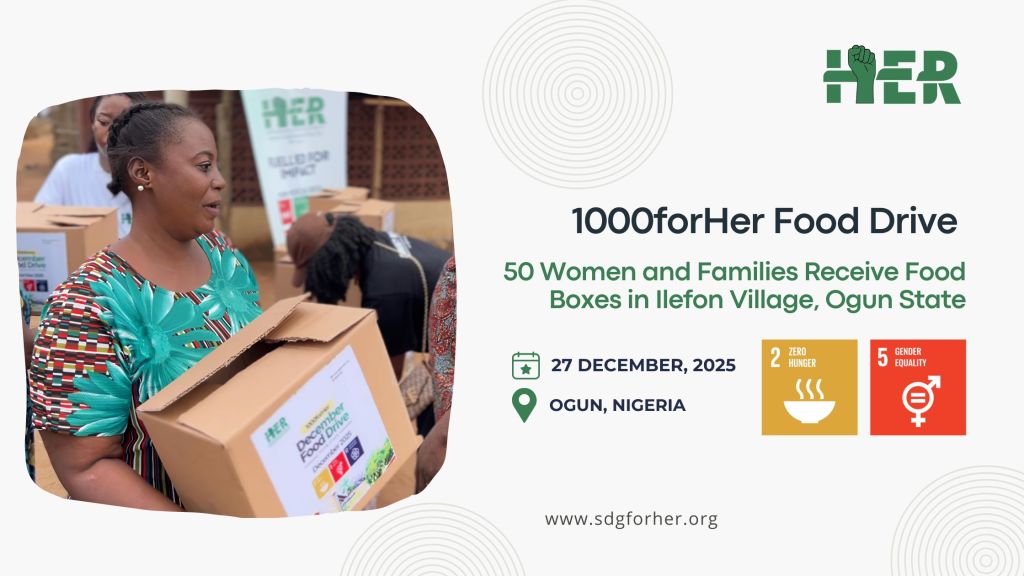

 Sustainable Development Goals for Her Initiative